Building Press, Part 6: The datacenter can't post, so the laptop does
LinkedIn does not have absurdly short sessions. I spent an embarrassing amount of time convinced it did. I would paste a fresh cookie into the Studio, the status pill would flip to "active," and for about three minutes everything looked healthy. Then the next queued post would fail, the pill would flip to "expired," and I would paste another cookie. The sessions were fine. The problem was where I was trying to use them.
That is the whole story of the last boundary in Press, the editorial engine I built to draft from my own work. It is the messiest boundary, because it is the only one I do not own both sides of. LinkedIn and X own their side, and they actively fight automation. The only durable way to handle automating social posting from a residential IP is to stop moving credentials and instead move the code to the side where the credential is legitimate.
TL;DR
Posting to LinkedIn and X from a datacenter IP fails because the IP itself signals bot activity, and no session or header workaround changes that. Transplanting a browser cookie into a headless automation browser also fails: platforms like LinkedIn bind sessions to the original device fingerprint, so a pasted cookie is rejected within minutes, not because it expired but because it looks suspicious. The fix is to stop moving credentials and instead move the code: a worker running on a residential connection holds its own persistent browser session, born where it is used, and drains a queue of approved drafts without the Studio ever touching the social platforms directly. Automating social posting from a residential IP, with a native login in a persistent browser profile, is the only approach that stays durable.
Posting belongs on the residential side
Press runs its Studio on a datacenter IP. That is correct for almost everything it does: building the static blog, serving the dashboard, talking to Postgres. It is exactly wrong for posting to social platforms. From a datacenter IP, LinkedIn and X treat a login or a post attempt as a bot and challenge or reject it. There is no header I can set to talk my way out of that. The IP itself is the signal.
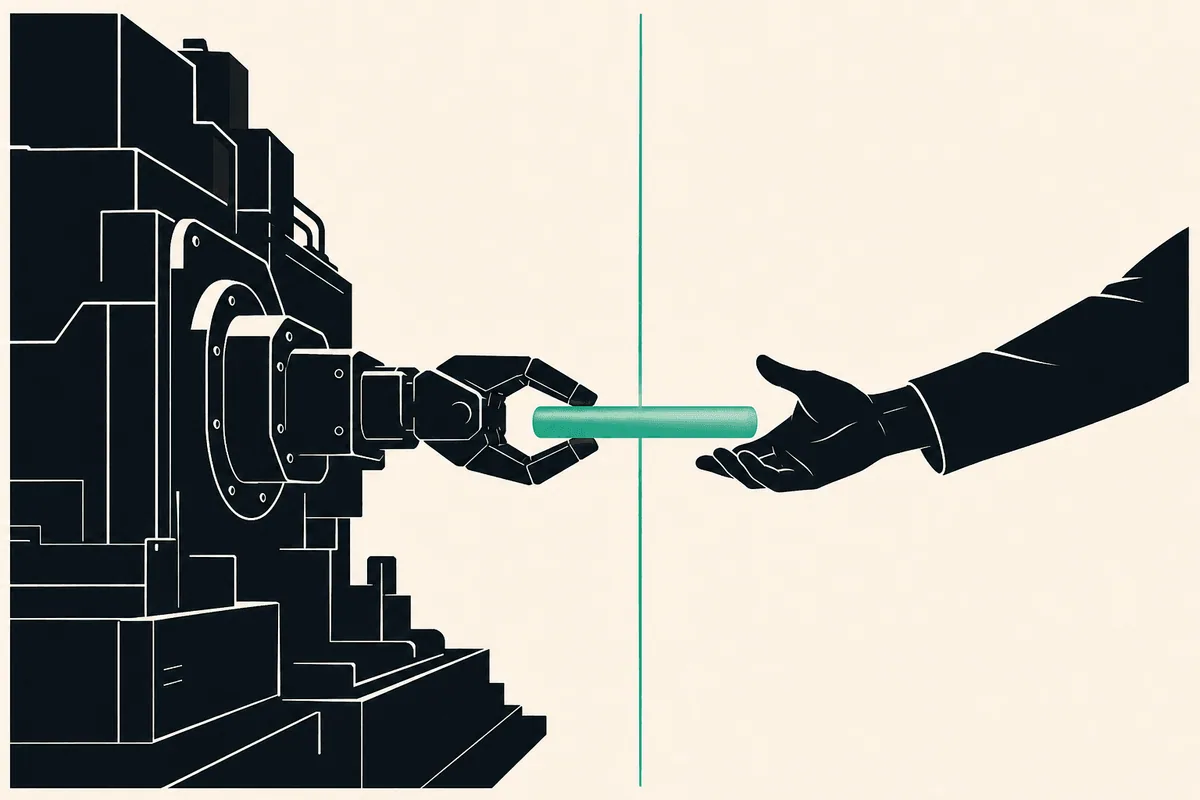
So the Studio never posts. It does the part it is allowed to do, which is decide and record, and it hands the actual posting to something that lives where posting is allowed. Concretely, the Studio maintains a queue, and a worker running on a residential connection drains it. The worker is the only component that ever touches LinkedIn or X.
The shape matters. The queue is a database table, so approving a post is just a row transition the Studio already knows how to do, and posting is a separate, asynchronous job. If the worker is offline, drafts sit in the queue and nothing breaks. When the worker comes back, it polls for due drafts, posts each through a real browser session, captures the resulting URL, and writes that URL back onto the row so the Studio can show "posted" with a link. The Studio's job ends at "approved and queued." The worker's job is everything that requires a residential IP and a real session.
The cookie-transplant trap
My first design tried to cheat. I would log into LinkedIn in my normal browser, copy the session cookie, and paste it into the Studio, which handed it to the worker's headless browser. The reasoning felt sound: a valid cookie is a valid cookie. It was not sound, and the failure was fast and consistent.
Warning
A platform session minted in your normal browser will not survive being transplanted into an automation browser. LinkedIn binds the session to the original device fingerprint and challenges the replay, which is why pasted cookies "expire" within minutes. The status is honest; the cookie is not actually expired, it is being rejected.
The tell was that the cookie worked for a few minutes and then stopped. A genuinely expired credential fails immediately. A credential that works briefly and then dies is being re-evaluated by the platform and found suspicious. LinkedIn was watching the session move from the device that created it into a Playwright-driven browser on a different machine, and it was challenging the replay.
Deep-dive: the cookie-transplant trap, and the durable fix
The li_at cookie is not a portable bearer token. It is bound to the browser and device context it was created in. When the worker's headless Chromium replayed it, the request carried a different fingerprint than the one the cookie was issued against, and LinkedIn's anti-automation layer flagged it. The "active for three minutes, then expired" pattern was that re-evaluation happening on a slight delay, not a TTL.
The durable fix is to stop transplanting anything. Instead of moving a credential to where the code runs, the worker runs a one-time native login inside its own persistent browser profile, so the session is born where it is used. After that, the cookie and the fingerprint match on every request, because they came from the same browser. The session stops being suspicious because it stops being a transplant.
One incident made the cost of getting this wrong visible. A draft got stuck in the queue while the LinkedIn session was unauthenticated. The worker, polling for due drafts, re-opened LinkedIn every two minutes to try again. Each attempt churned the session further and gave LinkedIn more reason to distrust the account. The fix was to make the worker back off a channel it cannot authenticate rather than hammer it: if a channel is not logged in, stop trying that channel and surface the state, instead of retrying into a wall.
No datacenter posting, and the remaining rough edges
I rejected posting from the datacenter IP directly. There was no version of that which worked; the IP is the disqualifier, and no amount of session hygiene changes it. I also rejected the cookie transplant, which is the more tempting dead end because it looks like it should work and even appears to work for a moment.
I want to be precise about what this design does not solve, because this boundary is the one where I have the least control and the most rough edges.
The worker can post, but it cannot reliably delete. Takedown depends on the platform's UI staying stable for an automated session, and that is far less dependable than posting, so removing something is partly a manual operation. I would rather state that plainly than pretend delete is one click.
The worker only captures a post's URL for some platforms. Where the platform exposes the resulting URL cleanly after posting, the Studio gets a real link back; where it does not, the row is marked posted without a canonical URL, and I reconcile that by hand if I need the link.
There is also a reach cost I accept on purpose. LinkedIn de-prioritizes posts that carry an external link in the body, so putting the canonical post URL inline trades distribution for attribution. The known mitigation is to put the link in the first comment instead of the body, which I have not built yet. For now the link goes in the body, and I take the reach hit knowingly rather than drop attribution.
A credential is a claim about a context
The thing I kept relearning, cookie after cookie, is that a credential is not a value you can carry around. It is a claim about a context, and platforms increasingly check the context, not just the value. The session was never the problem. My attempt to use it somewhere it was not issued was the problem.
That is the same move the rest of Press is built on, applied to the one boundary I share with someone hostile to automation. As in Building Press, Part 2: The data model is the spine, the system works because ownership is explicit. The database owns truth and the site only reads it. The revision owns the body and the post points at it. Here, the residential worker owns the session, because that is the only place the session is legitimate, and the Studio is not allowed to reach across that line and borrow it. The fix was to decide who is actually allowed to stand on each side, and build the system so neither side has to pretend to be the other.
FAQ
Why does posting to LinkedIn from a datacenter IP keep failing?
LinkedIn and X treat requests from datacenter IPs as bot activity and challenge or reject them regardless of session validity. The IP address itself is the disqualifying signal, and no header or cookie workaround overcomes it.
Why do transplanted LinkedIn cookies expire after a few minutes?
The li_at cookie is bound to the browser and device fingerprint it was created in. When replayed in a different headless browser, LinkedIn's anti-automation layer detects the fingerprint mismatch and rejects the session on a slight delay, which looks like expiry but is actually a rejection.
How do I automate social posting without getting blocked by LinkedIn?
Run a worker on a residential IP that performs a one-time native login inside its own persistent browser profile. Because the session is created and used in the same browser context, the fingerprint always matches and the session stays valid.
What happens if the posting worker is offline when a draft is due?
Drafts sit safely in the queue database and nothing breaks. When the worker comes back online it polls for due drafts, posts each one, and writes the resulting URL back to the queue row.
Why does LinkedIn suppress posts that contain an external link in the body?
LinkedIn algorithmically de-prioritizes posts with outbound links to reduce distribution of content that takes users off the platform. The known workaround is to place the link in the first comment instead of the post body.